All 25 hard trivia questions with answers
Which is the only letter that does not appear in the name of any U.S. state?
A. JB. QC. XD. Z
Show answer
B. Q J is in New Jersey, X in New Mexico and Texas, and Z in Arizona.
Which element has the chemical symbol K?
A. PhosphorusB. KryptonC. CalciumD. Potassium
Show answer
D. Potassium K comes from kalium, its Latin name.
Which planet spins on its side?
A. UranusB. SaturnC. VenusD. Neptune
Show answer
A. Uranus Its axis is tilted about 98 degrees.
Who composed the piano sonata known as the “Moonlight Sonata”?
A. Frédéric ChopinB. Wolfgang Amadeus MozartC. Ludwig van BeethovenD. Johann Sebastian Bach
Show answer
C. Ludwig van Beethoven The nickname came from a music critic, years after Beethoven’s death.
In what year did the Berlin Wall fall?
A. 1985B. 1991C. 1989D. 1979
Show answer
C. 1989 The border crossings opened on the night of November 9, 1989.
What is the longest bone in the human body?
A. FibulaB. FemurC. HumerusD. Tibia
Show answer
B. Femur The femur is the thigh bone.
Which country has the most lakes?
A. FinlandB. CanadaC. United StatesD. Russia
Show answer
B. Canada A McGill University study found about 62 percent of the world’s lakes larger than 25 acres in Canada.
What is the smallest country in the world?
A. LiechtensteinB. MonacoC. Vatican CityD. San Marino
Show answer
C. Vatican City It is entirely surrounded by the city of Rome.
Which gas makes up most of Earth’s atmosphere?
A. NitrogenB. Carbon dioxideC. ArgonD. Oxygen
Show answer
A. Nitrogen Nitrogen is about 78 percent of the air; oxygen about 21 percent.
Who wrote the novel “One Hundred Years of Solitude”?
A. Gabriel García MárquezB. Pablo NerudaC. Jorge Luis BorgesD. Isabel Allende
Show answer
A. Gabriel García Márquez He won the Nobel Prize in Literature in 1982.
What is the longest river in Europe?
A. DnieperB. DanubeC. VolgaD. Rhine
Show answer
C. Volga It flows through Russia into the Caspian Sea.
Which painter cut off part of his own ear?
A. Vincent van GoghB. Paul GauguinC. Edgar DegasD. Claude Monet
Show answer
A. Vincent van Gogh It happened in Arles, in the south of France, in December 1888.
In which country is the ancient city of Petra?
A. LebanonB. IsraelC. EgyptD. Jordan
Show answer
D. Jordan Its buildings are carved straight into rose-colored cliffs.
How many degrees do the inside angles of a hexagon add up to?
A. 540B. 360C. 720D. 1,080
Show answer
C. 720 Each angle of a regular hexagon is 120 degrees, and 6 × 120 = 720.
Which treaty, signed in 1919, ended World War I between Germany and the Allies?
A. Treaty of WestphaliaB. Treaty of VersaillesC. Treaty of GhentD. Treaty of Paris
Show answer
B. Treaty of Versailles It was signed on June 28, 1919, in the Hall of Mirrors.
What is the currency of Switzerland?
A. EuroB. KroneC. MarkD. Swiss franc
Show answer
D. Swiss franc Switzerland is not in the European Union and never adopted the euro.
Who discovered penicillin in 1928?
A. Joseph ListerB. Louis PasteurC. Marie CurieD. Alexander Fleming
Show answer
D. Alexander Fleming He noticed that a mold had killed the bacteria in a dish he had left out.
What is the largest moon of Saturn?
A. TitanB. EuropaC. IoD. Ganymede
Show answer
A. Titan Titan is larger than the planet Mercury. Ganymede, Europa and Io belong to Jupiter.
Which ancient wonder stood beside the harbor of Rhodes?
A. The ColossusB. The Hanging GardensC. The LighthouseD. The Temple of Artemis
Show answer
A. The Colossus The giant bronze statue was toppled by an earthquake in the 200s B.C.
Which animal is the national animal of Scotland?
A. UnicornB. Golden eagleC. LionD. Red deer
Show answer
A. Unicorn Unicorns appear on Scotland’s royal coat of arms.
Which blood type is known as the universal donor for red blood cells?
A. A negativeB. B positiveC. AB positiveD. O negative
Show answer
D. O negative People with AB positive blood can receive red cells of any type.
Who wrote “The Canterbury Tales”?
A. Edmund SpenserB. John MiltonC. Thomas MaloryD. Geoffrey Chaucer
Show answer
D. Geoffrey Chaucer He wrote it in Middle English in the late 1300s.
Which planet has the shortest year?
A. VenusB. MercuryC. EarthD. Mars
Show answer
B. Mercury Mercury goes around the Sun in 88 days.
In what year were the first modern Olympic Games held?
A. 1912B. 1900C. 1896D. 1888
Show answer
C. 1896 They took place in Athens, Greece.
What is the capital of New Zealand?
A. AucklandB. WellingtonC. ChristchurchD. Queenstown
Show answer
B. Wellington Auckland is the largest city, but the capital moved to Wellington in 1865.
Hosting tip
Save this round for last, or play it as a tie-breaker. To keep it fair for mixed groups, give one point for a right answer and an extra point to any team that can explain why, before you read the fact.
Questions
What makes these questions hard?
They need real knowledge rather than common sense: chemical symbols, treaties, painters and authors. The wrong choices are close neighbors of the right one, such as Wellington and Auckland, or Titan and Ganymede.
Is there an easier quiz?
Yes. Try the general knowledge quiz or the family quiz, or the easy quiz in our trivia for seniors.
More trivia questions
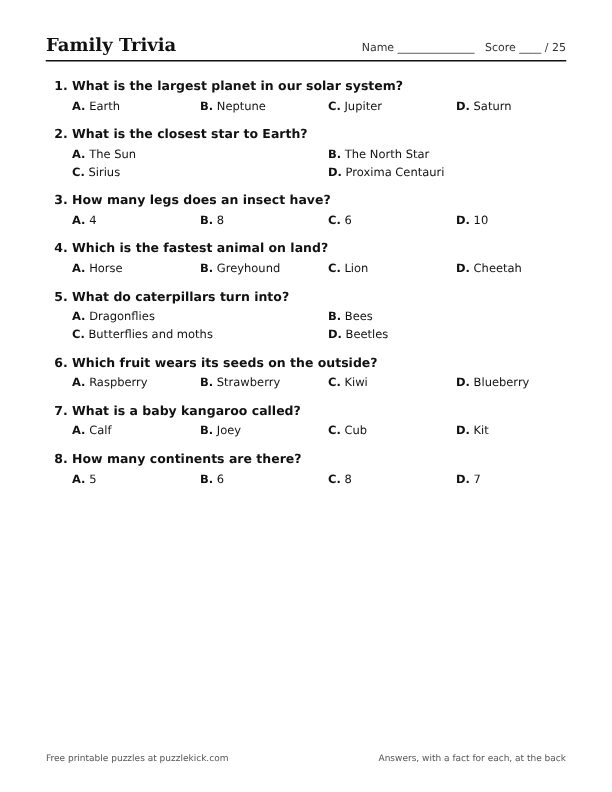 25 questions · answers
Family Trivia
What is the largest planet in our solar system?
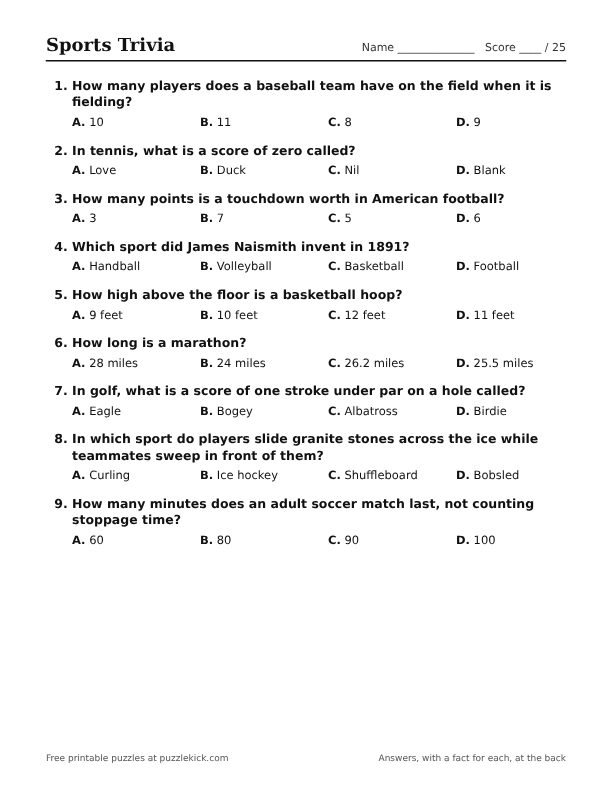 25 questions · answers
Sports Trivia
How many players does a baseball team have on the field when it is fielding?
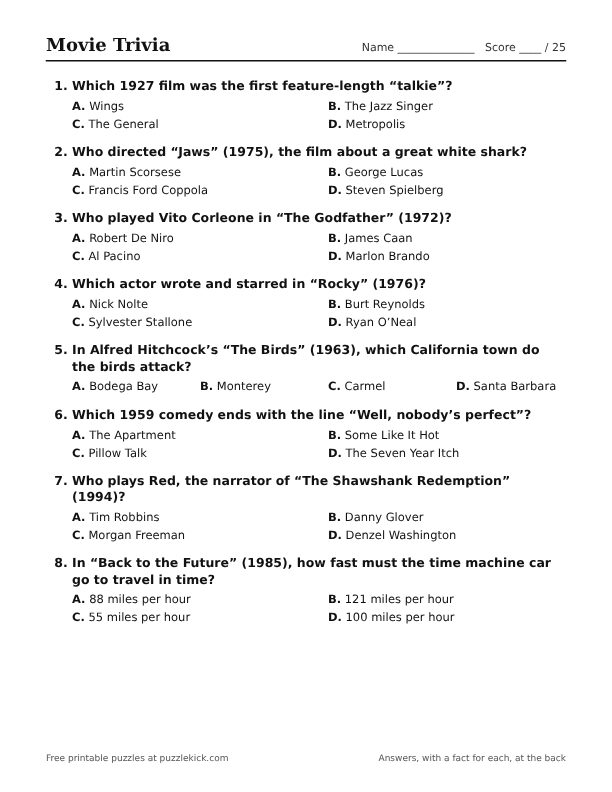 25 questions · answers
Movie Trivia
Which 1927 film was the first feature-length “talkie”?
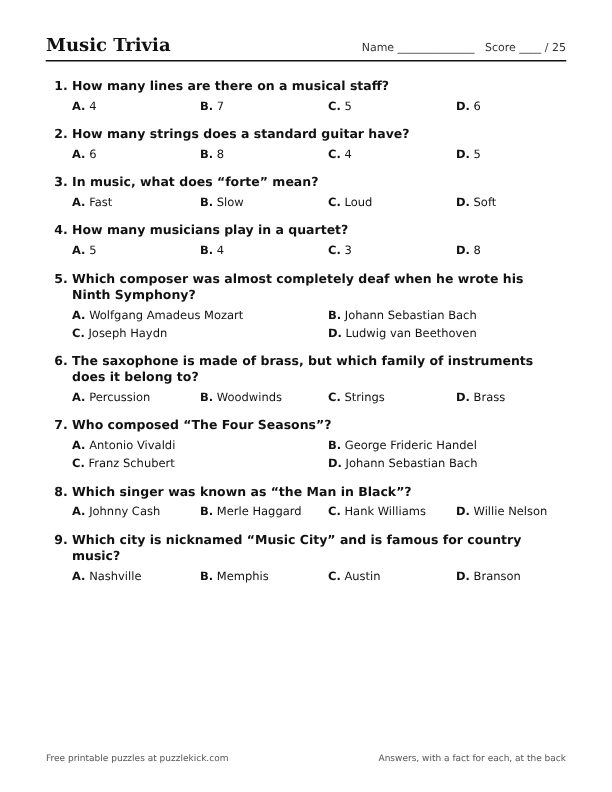 25 questions · answers
Music Trivia
How many lines are there on a musical staff?
All trivia questions · Trivia team names · Large print trivia for seniors