Which game should I start with?
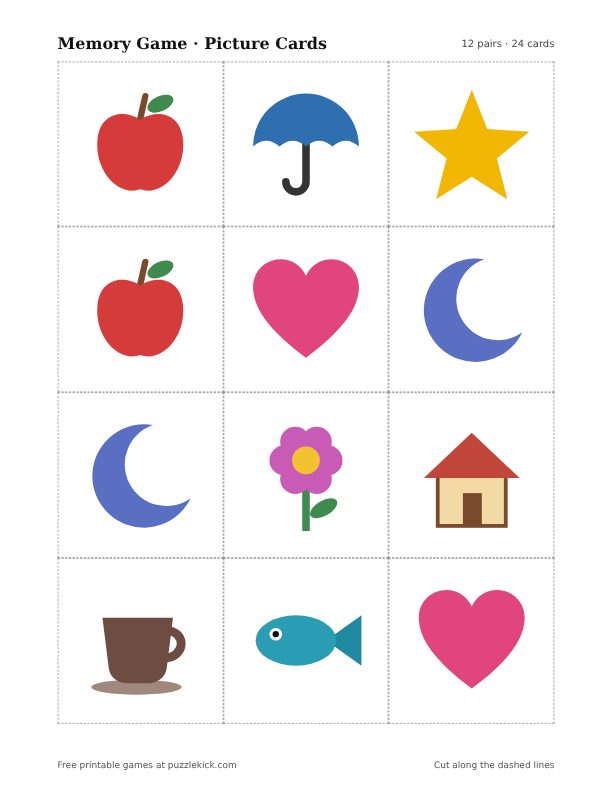
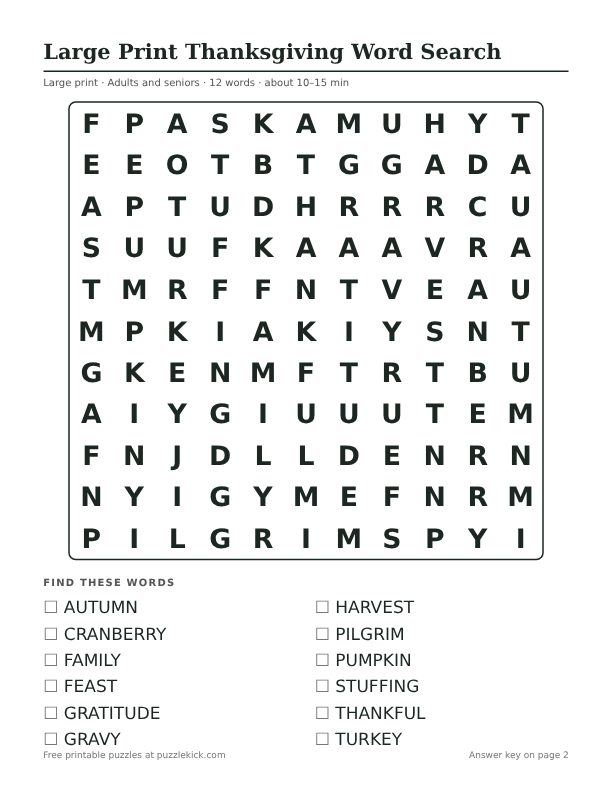
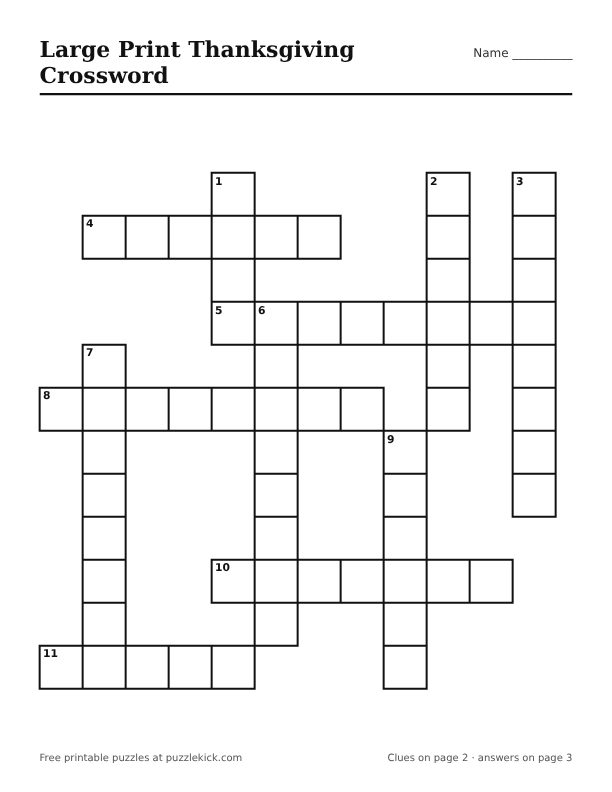
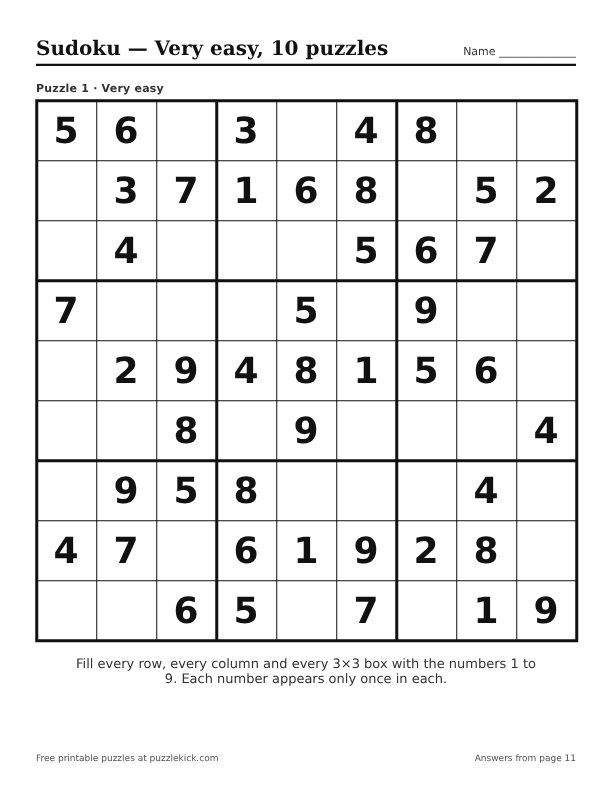
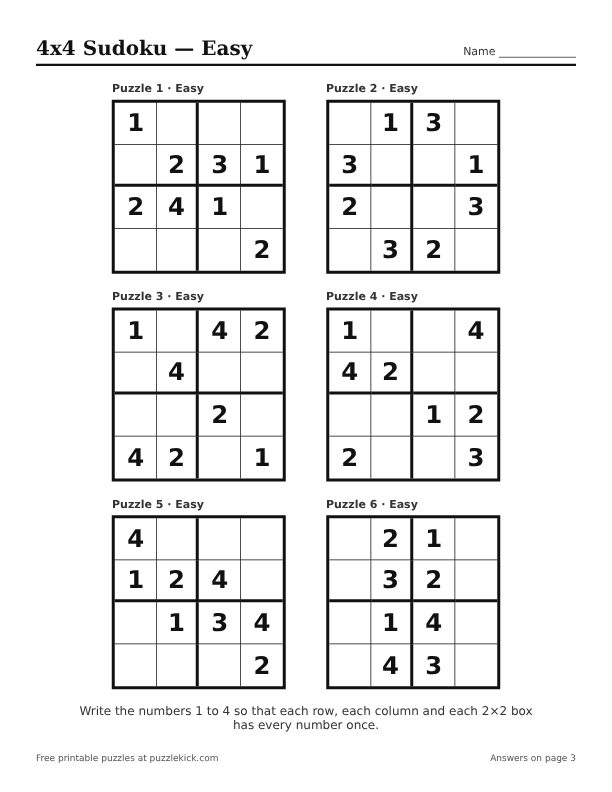
Choose by what the person already enjoys. Someone who likes cards will take to the memory matching game straight away. A lifelong reader may prefer a large print crossword, and someone who balanced the family checkbook often enjoys very easy sudoku. If you are not sure, a large print word search is the gentlest start: there is nothing to remember or spell.
When a game feels too easy, move up one step: more pairs in the memory game, the crossword without the word bank, or easy sudoku instead of very easy. When it feels frustrating, step back down. The right game is the one that feels like fun.
A brain games hour for activity directors
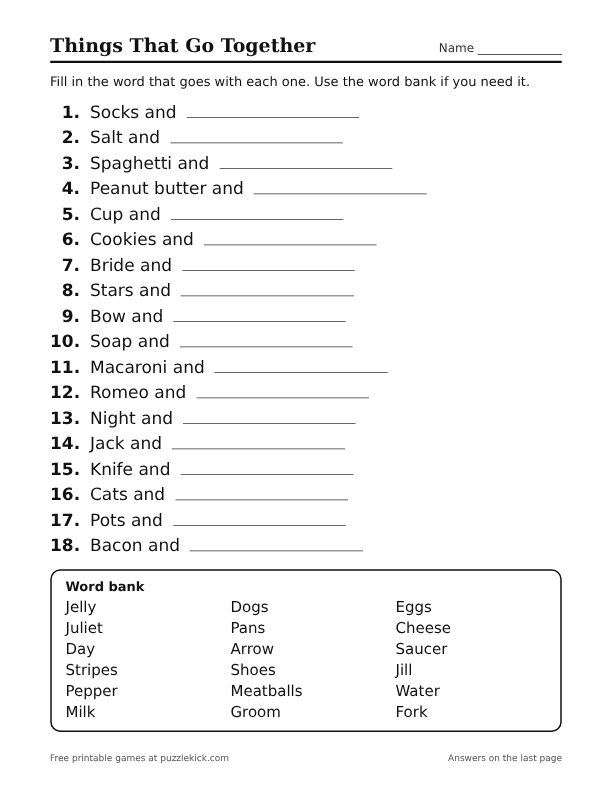
- Warm up (10 minutes): call and answer with things that go together. Everyone can join in, even without a pencil.
- Pencil and paper (20 minutes): hand out a large print word search or crossword on the same theme, so people can help each other.
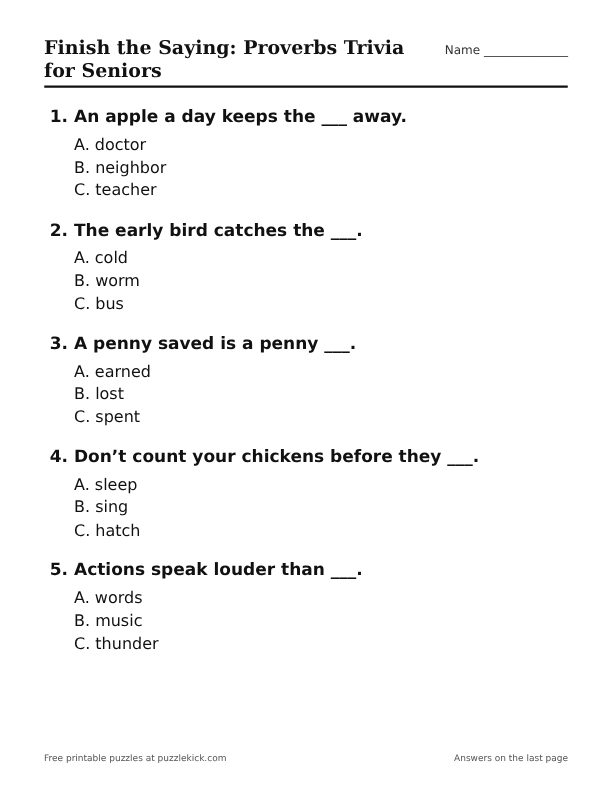
- Team game (20 minutes): a trivia quiz in small teams, or memory cards on each table.
- Wind down (10 minutes): share answers and stories. Many of our printables come with questions to talk about.
For something new every day, today’s puzzles has a fresh large print pack each morning.
Do brain games help?
Games and puzzles are a good way to spend time, keep the mind busy and enjoy company. Scientists are still studying whether they protect memory or thinking as people age, and the results so far are mixed. So we make no health promises: we simply try to make games that are clear, fair and fun. Staying active, sleeping well, seeing friends and talking with a doctor about any memory worries all matter too.
Made to be easy to use
- Large print: big letters, numbers and pictures on plain US Letter paper, in high-contrast black and white where possible.
- Answer keys: every puzzle with a single answer includes one, on the last page of the PDF.
- On screen: large buttons that are easy to tap on a tablet, and a keyboard works too.
- Checked: every puzzle is checked by computer before it is published. See how we make our puzzles.
Questions
Are these brain games free?
Yes. Every game on PuzzleKick is free to play and print, with no sign-up. Care homes, senior centers, libraries and churches may print as many copies as they need.
Which games work for people with dementia?
Simple, familiar games tend to work best: the memory cards played face up, things that go together read aloud, Finish the Saying, and large print word searches. Go at the person’s pace and focus on enjoying the time together.
Can I play on a phone or tablet?
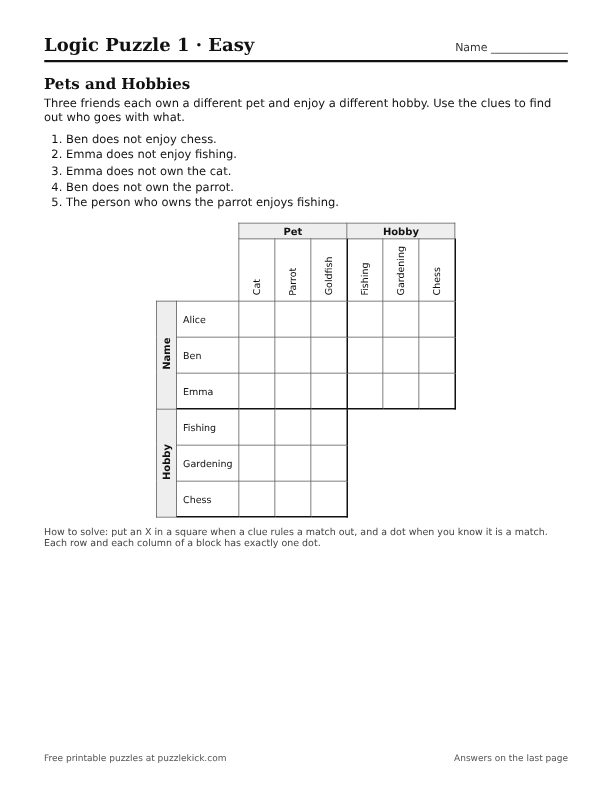
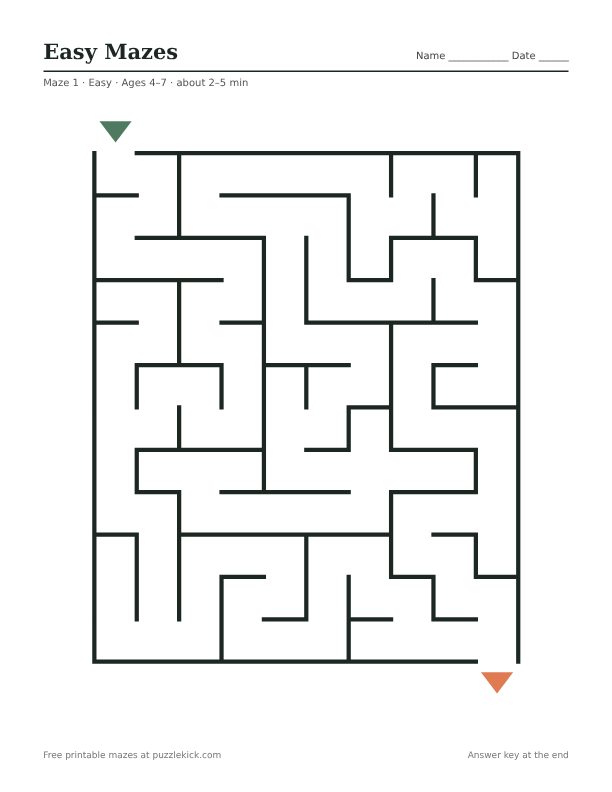
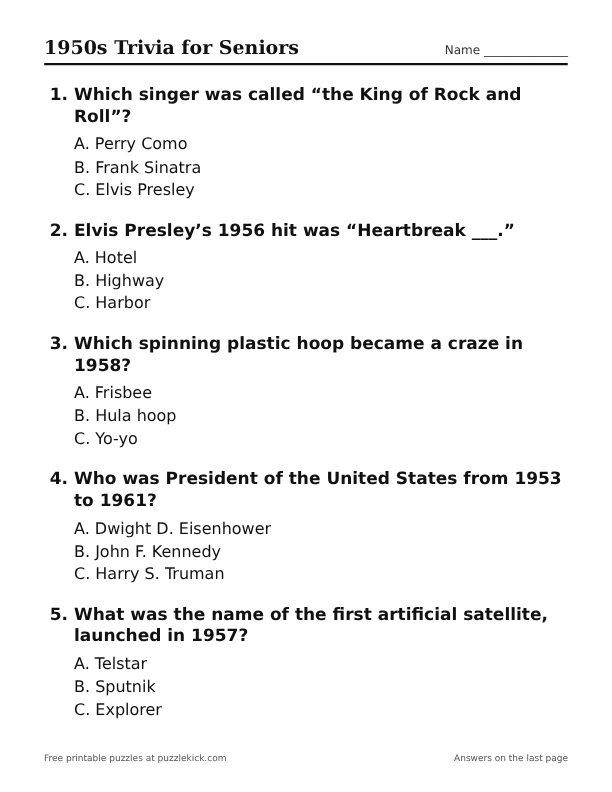
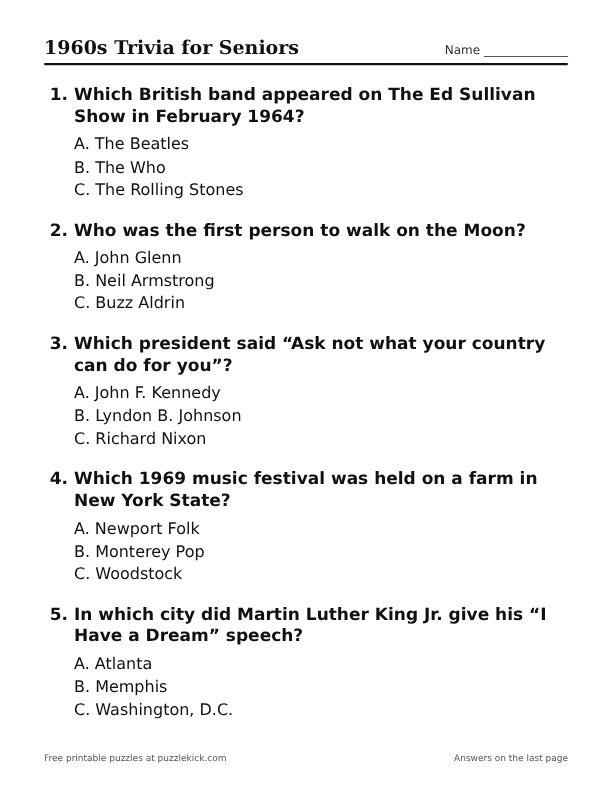
Yes. The memory games, crosswords, word searches, sudoku, logic puzzles, mazes and trivia can all be played on screen. A tablet is the most comfortable size for most people.